
What did the ancient Egyptians believe would happen when the physical body stopped breathing?
The transition from life to death was viewed not as a finality, but as the beginning of a precarious and necessary journey. To the ancient mind, the cessation of heartbeat and breath required the soul to navigate a complex, often hazardous geography known as the Duat, or the underworld. This path was not open to all without condition, and for those who navigated it, the ultimate destination was a state of being often described as the Field of Reeds—a paradise of eternal existence.
According to the Egyptian Museum, this journey was defined by a critical trial, a moment of profound accountability that stood between the deceased and their immortality. It was a process of examination rather than an automatic transition. The culture functioned under the assumption that the quality of one's life on earth directly influenced their status in the beyond. Thus, death became a test of cosmic alignment, where the moral character of the individual was placed under the scrutiny of divine forces.
This perception of death as a trial underscores the central tension of Egyptian afterlife beliefs: the desire for eternal peace balanced against the fear of permanent non-existence. While the visual record of these ceremonies is rich, scholars work to distinguish between literal interpretations of these myths and the symbolic values they aimed to instill. The evidence suggests that for the Egyptian individual, the goal was not merely to die, but to be found worthy by the gods who governed the scales of reality.
Who was the jackal-headed deity that supervised the scales of justice?
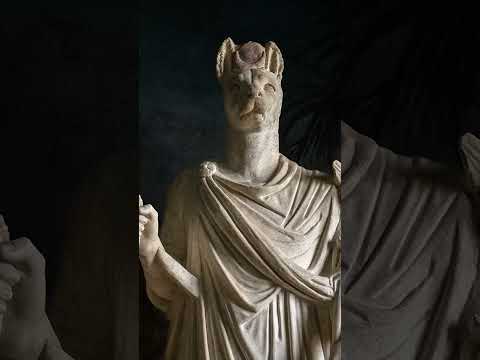
Anubis, frequently depicted as a jackal or a man with the head of a jackal, remains one of the most recognizable figures in the study of Egyptian funerary culture. According to the Egyptian Museum, this association with the jackal arose from the observation of these animals lingering around desert cemeteries. By deifying the jackal, the ancient Egyptians sought to transform a source of fear—the desecration of graves—into a form of protection, hoping the god would ensure that physical remains were kept intact and safe from scavengers.
Beyond his role as a guardian of the body, Anubis held a pivotal administrative position within the hall of judgment. According to the Kelsey Museum of Archaeology in their feature titled Death Dogs | Anubis in the Halls of Truth, Anubis acted as the supervisor of the scales. His task was to ensure the absolute fairness of the weighing process, meticulously checking the balance to see that no corruption entered the measurement. It was his hand that held the balance, and his presence that signaled the seriousness of the trial.
Research from the NIH in their article, The book of death: weighing your heart, clarifies that Anubis was not the sole observer of this event. It is understood that he performed his duties alongside other deities present in the hall, all of whom examined the heart during the ceremony. This suggests that the judgment was a collective divine effort, requiring the jackal-headed god to verify the integrity of a process that decided the permanent fate of a human soul.
What was the mechanism used to measure the moral worth of the deceased?
The central event of the judgment was the weighing of the heart, a ceremony where the internal moral weight of the individual was tested against a symbolic standard. As noted by the Egyptian Museum, the heart of the deceased was placed on one side of a scale, while the feather of Ma’at occupied the other. Ma’at was the personification of truth, justice, and the fundamental cosmic order that held the universe together. If the heart was to pass, it had to reach a perfect equilibrium with this feather.
While the visual record is consistent, archaeologists note that the exact physical composition of the feather beyond its symbolic role is not fully established by the archaeological evidence. The scale itself, however, served as the primary instrument for the transition. The heart was not viewed merely as an organ, but as the seat of the person’s actions and intent. If the heart weighed more than the feather, it implied that the individual had lived a life of imbalance, failing to adhere to the standard of Ma’at.
The consequences of failing this test were profound. According to the Egyptian Museum, if the heart was found to be heavy with sin, the identity of the deceased would cease to exist. A hybrid beast known as Ammit, a creature composed of parts from a lion, a hippopotamus, and a crocodile, waited to consume the heart. This action resulted in the destruction of the soul—a second, final death from which there was no recovery.
How did the deceased plead their innocence before the divine judges?
Before the final act of the weighing, the deceased faced a daunting panel of 42 divine judges. According to the Australian Museum, this stage of the process required the soul to stand before these figures and recite specific declarations regarding their behavior during their earthly life. This ritual, often referred to as the negative confession, was a methodical defense where the individual claimed innocence of various misdeeds, asserting that they had maintained the principles of truth and order.
The preparation for this encounter was intense, as the stakes of the judgment could not be higher. The Australian Museum reports that the *Book of the Dead* served as a vital guide for this phase. It contained the exact words and phrases required to address each of the 42 judges correctly. By reciting these lines, the deceased aimed to persuade the panel of their integrity and secure their passage to the next stage of the journey.
Some scholars argue that this suggests a degree of tactical preparation, where the *Book of the Dead* provided a means to navigate the afterlife bureaucracy. The ability to articulate these defenses was considered essential for anyone who wished to advance beyond the hall of judgment. It is an example of how the Egyptians attempted to structure their understanding of the afterlife, creating a codified, legalistic framework for the soul’s ultimate trial.
Was the Book of the Dead a magical shortcut for those who lived without virtue?
A central point of scholarly inquiry involves the function of the *Book of the Dead* and its potential as a way to bypass the moral requirements of the afterlife. According to the Australian Museum, the book provided the correct words for the judges, which could theoretically allow someone to pass the judgment even if they had not been entirely innocent. This has led to debates about whether the Egyptians believed the afterlife was a place of true moral reckoning or one that could be influenced by ritual knowledge.
A specific mechanism for this was the use of Spell 30B, which was often inscribed on a heart scarab amulet placed within the tomb. According to the Australian Museum, this spell was a "cheat code" of sorts, intended to prevent the heart from "betraying" the deceased during the weighing. By reciting this, the individual hoped to stop their own heart from revealing their secrets or their hidden sins to the scales, thereby ensuring a favorable balance with the feather of Ma’at.
Scholars still debate the extent to which this reliance on magical spells was intended to circumvent justice versus providing a protective layer for a righteous soul. While some view these spells as a means to manipulate the divine system, others argue they were part of a comprehensive funerary tradition meant to assist the deceased in their transition. The evidence remains split between the desire for authentic moral standing and the practical necessity of utilizing sacred texts to ensure a successful outcome.
What happened to those whose hearts remained light upon the scale?
The outcome of a successful weighing was the ultimate goal for every Egyptian seeking immortality. According to the Egyptian Museum and the Australian Museum, if the heart achieved a perfect balance with the feather, the deceased was deemed righteous. Having passed the trial, they were allowed to move forward safely through the Duat, finally appearing before Osiris, the lord of the afterlife.
This encounter with Osiris marked the conclusion of the judgment. Once they were brought into his presence, they were welcomed into the Field of Reeds. This was described as a paradise, an eternal existence that mirrored the ideal life, free from the threats of non-existence or the consumption of Ammit. It was here that the soul could dwell in peace, having successfully navigated the dangers of the hall of truth.
The transition was a cause for celebration within the funerary context, as it validated the life the person had lived and the rituals performed by their family. The journey from the halls of judgment to the presence of Osiris illustrates the hope for continuity, suggesting that the effort to live by Ma’at was rewarded. For the ancient Egyptians, the Field of Reeds was not just a destination; it was the final, hard-won sanctuary for those who had survived the scrutiny of the gods.
The heart was not viewed merely as a biological organ, but as the keeper of a person’s actions and secrets.
Scholars still debate whether the Book of the Dead was a genuine requirement for the righteous or a loophole for those who lived without virtue.
Why does this ancient trial continue to matter to our understanding of human history?
The persistence of the imagery surrounding Anubis and the scales of judgment provides a window into the evolution of human moral reasoning. For the ancient Egyptians, the trial of the soul was a physical manifestation of their commitment to order, truth, and accountability. It was a societal structure that projected the values of the living into the realm of the dead, creating a standard of conduct that individuals spent their entire lives trying to uphold.
As we continue to analyze excavation reports and the texts found within tomb complexes, our understanding of these rituals deepens. While we may never possess the full context of how these beliefs changed across different dynasties or regions, the evidence confirms that the weighing of the heart was a cornerstone of their civilization. It demonstrates a sophisticated, early attempt to conceptualize justice that extended beyond the immediate reach of earthly laws.
This evidence matters because it bridges the gap between the mundane and the transcendent. By studying the fear of Ammit and the hope for the Field of Reeds, we learn how a culture processed the reality of death and the longing for purpose. The questions left by the ancient Egyptians regarding the "weighing" of a life continue to mirror our own human interest in what it means to be good, and what happens to the essence of a person when the physical body fails. Further exploration of these funerary texts invites us to consider how our own standards of justice and truth define our place in the world today.
Watch the Kemet filmFirst published on Kemet (kemet-stories.pages.dev) · reference KMT-EC60F6
← Back to the archive