
What are we actually seeing when we look at an ancient cat mummy?
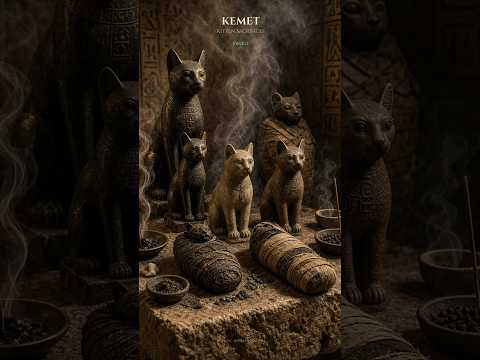
The image of a feline wrapped in intricate linen bandages is one of the most iconic sights in archaeology, yet the reality behind these artifacts is more complex than a simple burial of a house cat. When we examine these objects, we must distinguish between the object itself and the narrative we project upon it. According to the Smithsonian Institution, the process of preparing these animals for eternity involved wrapping them tightly in linen and often painting their specific facial features directly onto the bandages using black ink. This artistic attention suggests that the exterior appearance of the mummy was as significant as the remains hidden within. The precision of the wrapping and the symbolic decoration indicate that the mummy was not merely a way to preserve a body; it was a carefully constructed vessel meant to convey a message of religious devotion.
Scientific analysis has shifted the understanding of these objects from mere curiosities to indicators of a massive religious practice. The Manchester Museum and the McClung Museum of Natural History and Culture have both confirmed that these mummies were produced in the hundreds of thousands. While some might assume these were simply family pets being laid to rest by grieving owners, the sheer volume of these remains suggests a purpose far removed from private mourning. These were not exclusively individual animals cherished in a home; they were components of a large-scale, organized tradition that served the needs of an entire society. The evidence directly shows a industrial-scale approach to ritual, which implies that the creation of these mummies was a standardized, repeatable, and highly requested process.
Were these animals truly worshipped as living deities?
To understand why so many cats were preserved, one must look to the temple of the goddess Bastet at Bubastis. The McClung Museum of Natural History and Culture notes that cats were considered the earthly embodiment of this deity. Within the sacred precincts of her temple, cats occupied a role of distinct privilege, living out their lives as representatives of the divine. This status explains why the animal became the focal point for religious expression among the general population of Egypt. The scholars infer that the proximity of these cats to the divine presence at Bubastis granted them a unique spiritual status that ordinary cats might not have possessed.
However, the transition from a living temple cat to a votive offering involved a process that has garnered significant scholarly attention. According to the Manchester Museum, the mummification of these animals was a ritualized act. The sacrifice was viewed as a vessel for spiritual expression, prioritizing the needs of the devotee and the favor of the gods over the life of the individual animal. This distinction is crucial; it separates the domestic cat, protected in a household to ward off vermin, from the cat raised specifically for the altar. Evidence suggests that the act of killing these animals was part of a formalized religious ceremony rather than a casual act of disposal. While we know the sacrifice happened, what remains unknown is the exact religious liturgy or prayers that accompanied these ritualized deaths, leaving scholars to infer the emotional and spiritual weight these events held for the ancient practitioners.
How did the commercial market for votive offerings function?
The mass production of cat mummies was not a localized temple task but a commercial enterprise that fed into the religious lives of pilgrims. The Egypt Museum reports that mummified cats were sold to visitors at temple sites and nearby markets. These pilgrims purchased the offerings to present at the altars of their gods, with the explicit hope of gaining divine blessings, healing, or favor. The marketplace for these items suggests an infrastructure where priests and breeders worked together to supply the constant demand of a devout populace. This economic reality paints a picture of a busy, bustling religious life where piety was linked to consumption. Because the demand for these offerings was so high, the supply chain had to be both steady and large.
Excavation reports and studies from the Egypt Museum suggest that this religious industry was deeply embedded in the social fabric, making the act of purchasing a mummy a standard part of the pilgrimage experience for those seeking to connect with the divine. While the scale of this production is clearly documented through the archaeological record, the internal dynamics of how these markets operated—the pricing, the competition between different temples, and the oversight of the breeding programs—remain a matter of ongoing study. The evidence supports the existence of a high-functioning religious economy, though the specific administrative details of how priests managed the supply chain are still hidden beneath the sands of time.
Is it possible that these mummies served a purpose beyond the temples?
While the vast majority of findings are linked to votive offerings for deities, evidence suggests that the use of cat mummies extended into the personal lives of the elite. The Egypt Museum notes that some of these preserved felines were used as offerings in the burials of wealthy individuals. In this context, the cat served a different function: it was intended to provide protection for the deceased in the afterlife.
These mummies were not always household pets; many were bred and ritually killed to satisfy the high demand for votive offerings to the goddess Bastet.
This suggests that while the temple was the center of the cat cult, the presence of these animals as funerary goods shows that their spiritual power was valued in the private, domestic sphere as well. Whether placed in a tomb to guard a master or offered at a temple to secure a blessing, the cat occupied a unique, multi-faceted position in the Egyptian worldview that bridged the gap between daily life and the eternal hereafter. What remains unclear is whether there was a distinct difference in the quality or preparation of a temple-bought mummy versus a private, burial-intended mummy. While the evidence clearly distinguishes their primary purpose, the biological and artistic variations between them are still being evaluated by researchers who aim to see if the "class" of the mummy reflected the status of the person who provided it.
What are the gaps in our current understanding?
Despite the millions of mummies excavated, researchers are still working to resolve several fundamental questions regarding the composition of these bundles. One of the most significant debates in the field is the frequency of so-called fake mummies. There is ongoing discussion regarding whether every linen-wrapped package contains a complete feline or if many contain only partial remains, bone fragments, or even non-animal materials. Some scholars infer that these "fakes" might have been the result of supply chain shortages or unethical vendors trying to meet demand, while others argue that these bundles were symbolic offerings that did not require a complete skeleton to be effective in the eyes of the gods.
Furthermore, the mechanics of this industry remain largely opaque. While we know the scale of production was massive, we have yet to understand the specific supply chains managed by temple authorities. The Animal Mummy Project, led by the Cairo Museum in partnership with the American University in Cairo, is currently conducting research to distinguish between different categories of mummification—specifically differentiating between those intended as sacred temple dwellers, those meant as votive offerings, and those used as funerary food or companions. This project matters because it aims to categorize the chaotic archaeological record, allowing us to reconstruct the precise intentions of the people who created these objects centuries ago.
The ongoing research by the Cairo Museum and the American University in Cairo is vital for identifying whether mummy bundles served as sacred offerings or protective funerary companions.
Why did this widespread practice eventually fade?
The intensity of cat mummification was not a permanent fixture of Egyptian history. By the time of the Roman conquest of Egypt in 30 B.C., the practice began to experience a noticeable decline. According to the Egypt Museum, the high-volume production of these offerings fell out of favor, leading to a reduction in their ritual significance. The exact causes of this decline remain a subject of investigation. We see the clear evidence of the drop-off, but the "why" is subject to intense academic debate.
Scholars are currently looking at the socio-religious pressures that may have triggered this shift. It is likely that the changing political and cultural landscape of Roman Egypt fundamentally altered the way citizens interacted with traditional gods like Bastet. The Roman conquest brought with it new cultural values, changing trade routes, and shifted religious priorities, which may have rendered the mass-production of animal mummies incompatible with the new status quo. The sudden drop in mass production suggests that the industry was highly sensitive to the broader changes occurring within the civilization, marking the end of a long, enigmatic era of ritualized animal preservation. While we can see the decline, the exact mechanism—whether it was a top-down ban or a gradual loss of public interest—remains largely hidden from the historical record.
Why does this evidence still matter to us today?
The history of these cat mummies provides a window into the intersection of animal life, human belief, and economic organization in the ancient world. The Smithsonian Institution emphasizes that cats were kept as domestic partners to protect homes from snakes and mice, yet they simultaneously held a position of profound religious power. Studying these remains forces us to acknowledge how a single species could hold such vastly different roles depending on the needs of the human population. The evidence shows that for the ancient Egyptian, there was no contradiction in viewing a cat as both a functional pest-controller in the barn and a sacred vessel for the divine at the altar.
This complexity is why the ongoing research, such as the work being done by the Cairo Museum, remains vital. By looking closely at the remains, we are not just counting thousands of animals; we are documenting a sophisticated, centuries-long tradition that reflects how ancient people navigated their relationship with the divine. The evidence from these sites continues to challenge modern assumptions about the boundary between human and animal, revealing a society that saw the presence of the sacred in the most humble of creatures. It matters because it reminds us that religious expression often manifests in physical, tangible ways that are shaped by economics, social hierarchy, and the daily realities of life. Even when the practice faded in 30 B.C., the legacy of these feline mummies remains a testament to the enduring human desire to bridge the gap between our mortal world and the eternal mystery of the divine.
Watch the Kemet filmFirst published on Kemet (kemet-stories.pages.dev) · reference KMT-47D42E
← Back to the archive